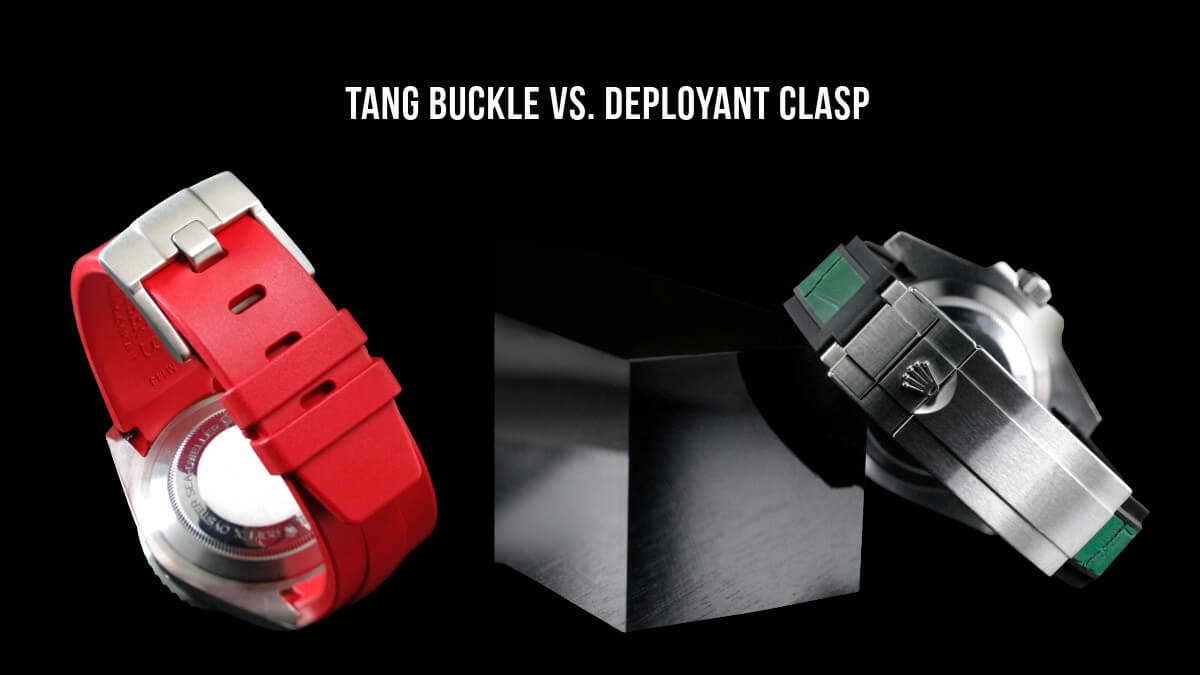
Choosing a watch strap involves more than selecting a material or color. The closure can have a significant influence on how a luxury watch feels on the wrist, how easily it can be put on and removed, how the strap is adjusted, and even how the watch presents itself when worn.
Two of the most established systems are the tang buckle and the deployant clasp.
A tang buckle, sometimes called a pin buckle or ardillon buckle, uses a traditional pin-and-hole mechanism similar to a belt buckle. A deployant clasp, sometimes called a deployment clasp or folding clasp, uses hinged metal components that unfold to open and fold together to secure the strap.
Neither system is universally better.
For some watches, a lightweight tang buckle offers exceptional simplicity and freedom of adjustment. For others, a deployant clasp provides the convenience and appearance expected from the original watch design.
For owners of Rolex, Tudor and other luxury watches, the decision becomes even more important because certain straps are specifically engineered around a particular closure.
This guide examines the differences between a tang buckle and deployant clasp, their respective advantages and disadvantages, and how to determine which closure is best suited to a particular watch and lifestyle.
What Is a Tang Buckle?
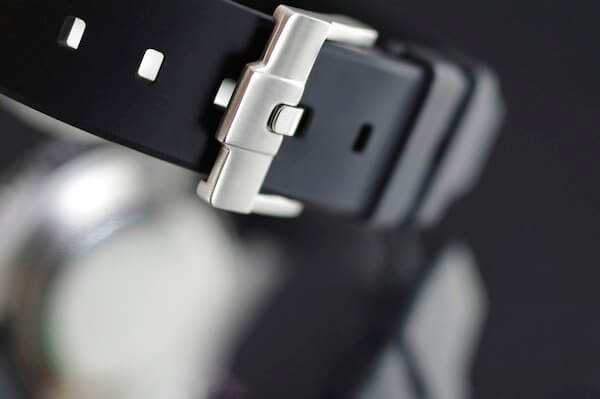
The tang buckle represents one of the simplest and most enduring closure systems in watchmaking.
Its operation is straightforward. The longer section of the strap passes through the buckle frame and a metal pin—known as the tang—passes through one of several adjustment holes. The excess portion of the strap is then secured through one or more keepers.
Because there are few moving parts, the design remains mechanically simple.
Tang buckles can be found across virtually every category of watch, from traditional dress watches and vintage pieces to contemporary dive watches, chronographs and professional tool watches.
Advantages of a Tang Buckle
Lightweight Construction
One of the most noticeable differences between a tang buckle and a folding clasp is the amount of metal positioned beneath the wrist.
A tang buckle requires relatively little hardware. This helps preserve the natural flexibility of the strap and can create a particularly comfortable configuration for owners who prefer minimal hardware against the underside of the wrist.
This characteristic can be especially desirable when combined with a supple vulcanized rubber strap.
Simple Adjustment
Tang buckles provide straightforward sizing.
Moving the tang from one hole to another changes the circumference of the strap immediately. There are no folding blades to reposition and no separate clasp adjustment procedure.
This can be particularly useful when wrist circumference changes slightly due to temperature, activity or climate.
Mechanical Simplicity
There are very few components within a traditional tang buckle.
For collectors who appreciate simplicity, this is one of its strongest qualities. There are no folding mechanisms or release buttons required for normal operation.
A Traditional Sport-Watch Appearance
The visible buckle and strap tail create a classic aesthetic associated with military watches, dive watches, pilot watches and traditional sport watches.
For certain timepieces, that simplicity complements the character of the watch exceptionally well.
Potential Disadvantages of a Tang Buckle
Repeated Flexing of the Strap
A tang buckle requires the strap to bend whenever the watch is fastened or removed.
On leather straps, repeated bending around the selected hole can eventually produce visible creasing or wear.
This concern is significantly different with a properly engineered vulcanized rubber strap, which does not behave like leather, but repeated manipulation remains part of the tang-buckle wearing experience.
The Watch Fully Opens
When a tang buckle is released, the strap separates into two open ends.
This creates a brief moment while putting on or removing the watch when it must be securely held. For a valuable luxury watch, careful handling is therefore particularly important.
Additional Steps When Fastening
A tang buckle requires the wearer to position the strap, locate the appropriate hole, insert the tang and pass the remaining strap through its keeper.
The process is simple, but it requires slightly more handling than opening and closing a pre-sized folding clasp.
What Is a Deployant Clasp?
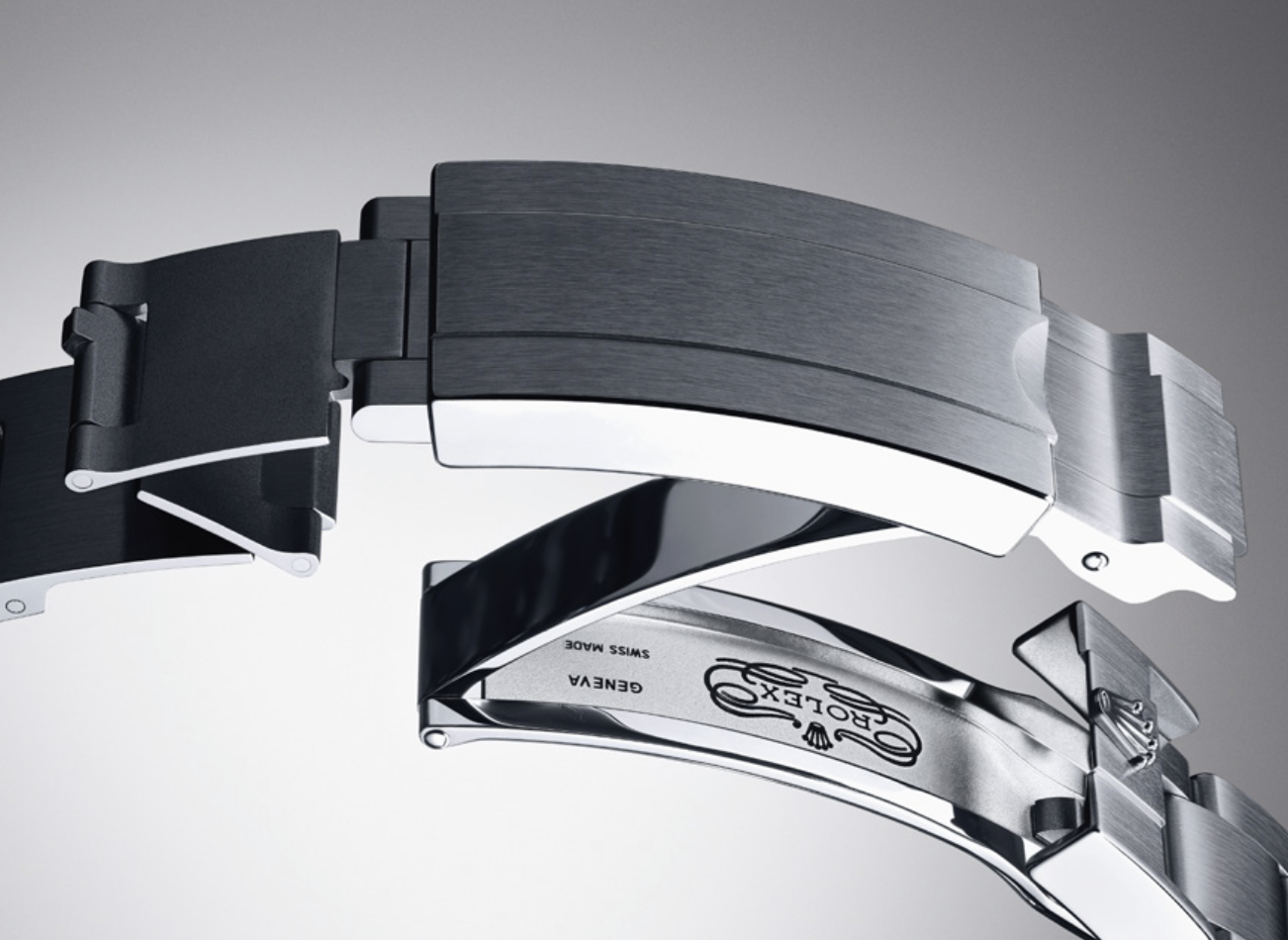
A deployant clasp uses a folding metal mechanism rather than a conventional pin-and-hole buckle as its principal opening and closing system.
Depending on the design, one or more articulated metal blades unfold to create sufficient space for the hand to pass through. Once the watch is positioned on the wrist, the clasp folds closed.
There are several variations, including:
- Single-fold deployant clasps
- Double-fold or butterfly clasps
- Push-button deployant clasps
- Folding sport clasps with safety locks
- Clasps with extension or micro-adjustment systems
Luxury watch manufacturers frequently develop proprietary versions of these systems.
For this reason, the term deployant clasp should not be interpreted as one standardized design. The dimensions, locking mechanism, adjustment system and comfort can differ considerably between manufacturers.
Advantages of a Deployant Clasp
The Strap Remains Connected
One of the most practical characteristics of a deployant clasp is that the two sides of the strap normally remain connected even when the clasp is open.
Instead of completely opening into two separate ends, the strap forms a larger loop.
This can reduce the likelihood of accidentally dropping the watch while putting it on or removing it.
It does not make a watch impossible to drop, but it provides an additional degree of control during normal handling.
Reduced Bending on Certain Straps
Traditional leather straps can experience considerable bending around the buckle and adjustment holes.
A correctly fitted deployant clasp can reduce this repeated manipulation because the strap is generally sized once and then opened and closed through the folding mechanism.
This can help preserve the appearance of high-quality leather, particularly around the adjustment area.
Claims that a deployant clasp will make every strap last a specific number of times longer should be treated cautiously, however. Strap life depends on the material, construction, environmental exposure, wearing frequency and clasp design.
Fast Daily Operation
Once properly sized, a deployant clasp can be exceptionally convenient.
The wearer opens the clasp, positions the watch and closes the mechanism. There is generally no need to locate an adjustment hole each time the watch is worn.
Integrated Luxury Appearance
Many modern luxury watches are engineered around sophisticated folding clasps.
When the strap and clasp have been designed as a complete system, the result can create a highly integrated appearance that complements the architecture of the watch.
This is particularly relevant when a replacement strap has been specifically engineered to retain the watchmaker’s original clasp.
Potential Disadvantages of a Deployant Clasp
More Hardware Beneath the Wrist
A folding clasp contains considerably more metal than a traditional tang buckle.
Depending on wrist anatomy and the specific clasp design, the folding blades can occupy a larger portion of the underside of the wrist.
A properly engineered clasp can be very comfortable, but clasp geometry and strap sizing are critical.
More Complex Sizing
Many deployant systems must be correctly positioned so that both the clasp and watch head remain centered around the wrist.
Some designs provide excellent micro-adjustment capabilities, while others offer relatively little adjustment.
The characteristics depend entirely on the individual clasp.
Greater Mechanical Complexity
Folding blades, locking mechanisms, safety catches and push-button systems introduce additional components.
This complexity is not inherently negative—many of the world’s finest watches employ sophisticated clasps—but it is substantially different from the mechanical simplicity of a tang buckle.
Tang Buckle vs. Deployant Clasp: Quick Comparison
| Feature | Tang Buckle | Deployant Clasp |
| Comfort | Lightweight with minimal metal beneath the wrist | Depends strongly on clasp geometry and correct sizing |
| Adjustment | Easy hole-by-hole adjustment | Varies by clasp; some require precise sizing |
| Strap Wear | More repeated bending during fastening | Can reduce repeated bending, particularly on leather |
| Handling Safety | Strap fully opens when unbuckled | Strap generally remains connected as a loop |
| Ease of Use | Simple but requires fastening each time | Very fast once correctly sized |
| Weight | Generally lighter | Generally heavier |
| Mechanical Complexity | Very low | Moderate to high |
| Aesthetic | Traditional, clean and sport-oriented | Integrated, technical and contemporary |
| Best For | Rubber straps, sport watches and wearers seeking simplicity | Compatible luxury watches, leather straps and owners preferring a folding closure |
Is a Deployant Clasp More Secure Than a Tang Buckle?
This question requires more nuance than a simple yes or no.
A high-quality tang buckle is an extremely secure closure when correctly fastened. The tang physically passes through the strap hole, making the system both simple and dependable.
A high-quality deployant clasp may incorporate folding blades, push-button releases, locking mechanisms and even secondary safety systems.
The advantage of the deployant during handling is that the strap generally remains connected when opened. If the wearer loses grip while putting on the watch, the open strap may remain around the wrist or hand rather than immediately separating.
However, closure quality matters more than closure category alone.
A precisely manufactured tang buckle is preferable to a poorly constructed folding clasp, just as a properly engineered OEM deployant system should not be compared with an inexpensive generic clasp.
For a luxury watch, fit, materials, engineering and compatibility should always take precedence over simply choosing one closure type because it appears more complex.
Which Closure Is More Comfortable?
Comfort is highly personal, but tang buckles have an inherent advantage in simplicity.
Because a tang buckle places very little metal underneath the wrist, the strap can follow the natural curvature of the arm with minimal interference.
A deployant clasp introduces a larger rigid structure beneath the wrist.
On a properly sized strap, this can be extremely comfortable. On another wrist, the folding section may sit directly against a sensitive point or cause the watch head to shift away from its ideal position.
This is why strap length and clasp position are particularly important with deployant systems.
Comfort should therefore be evaluated as a complete system involving:
- Wrist circumference
- Watch diameter and weight
- Strap length
- Strap flexibility
- Clasp dimensions
- Clasp position beneath the wrist
The closure cannot be evaluated independently from the strap and watch.
Tang Buckles and Vulcanized Rubber Straps
Many comparisons between tang buckles and deployant clasps focus heavily on leather.
Luxury vulcanized rubber changes the equation.
Leather can develop permanent creases, enlarged holes and surface deterioration after repeated bending. Properly formulated vulcanized rubber behaves differently and is specifically suited to demanding environments involving moisture, heat and repeated movement.
This makes the tang buckle particularly compelling for a premium rubber watch strap.
The lightweight hardware complements the flexibility of the rubber, while multiple adjustment holes allow the wearer to change fit quickly.
For sport watches and daily wear, the result can be extremely practical without sacrificing the precise fit expected from a luxury strap.
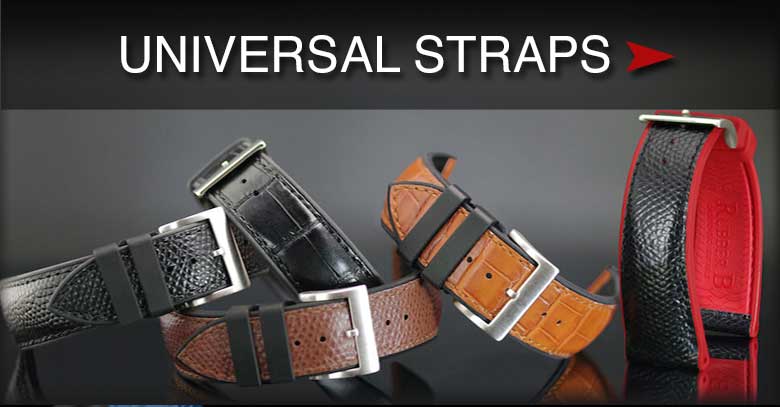
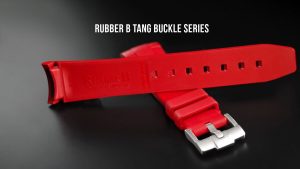
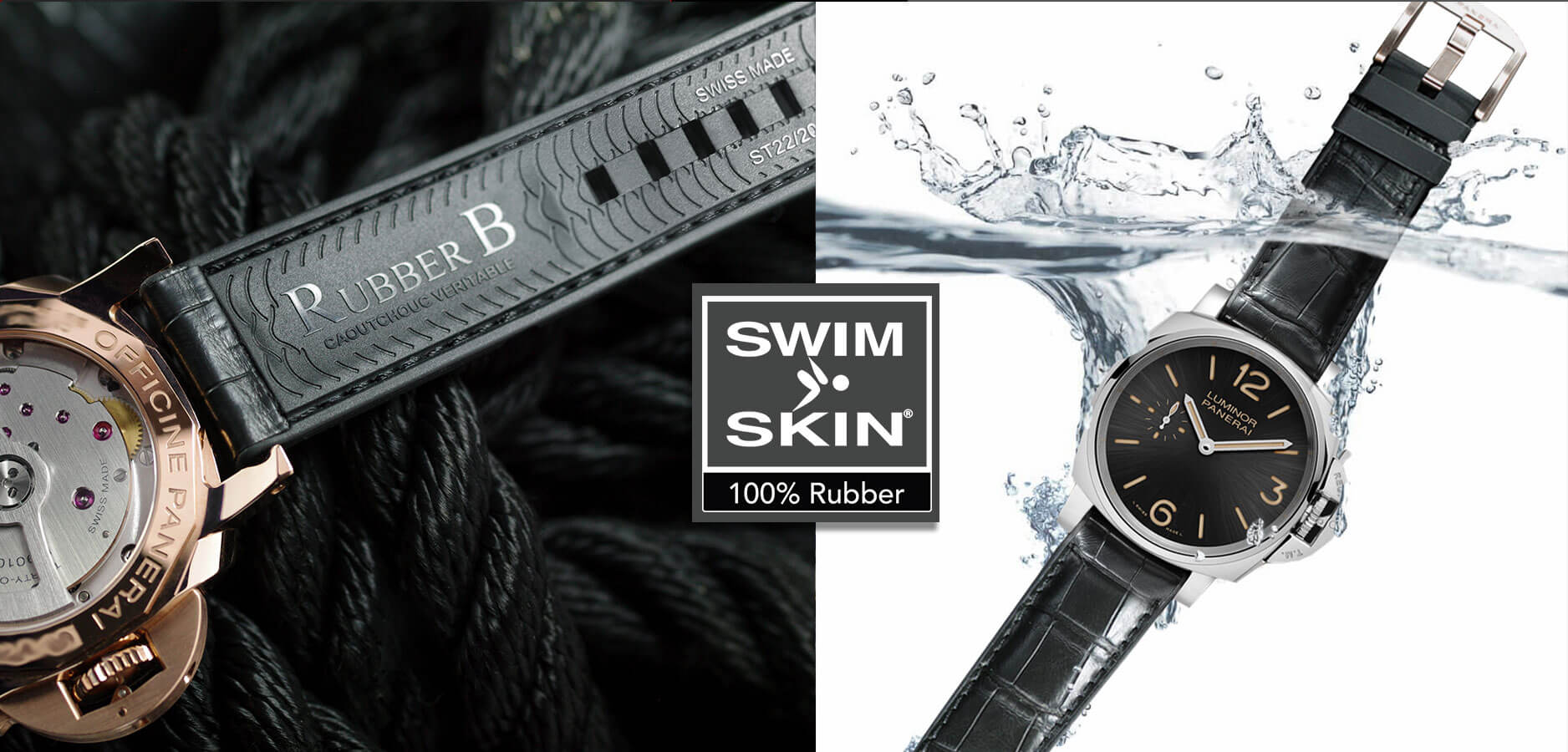
Rubber B Tang Buckle Series
Rubber B developed the Tang Buckle Series for collectors who prefer an independent closure rather than using the original watch clasp on compatible references.
Selected Rubber B Tang Buckle Series straps feature a 316L stainless-steel tang buckle supplied with the strap.
The closure is combined with Rubber B’s reference-specific engineering rather than functioning as a generic straight-end replacement band.
On applicable models, Blocked Integration™ incorporates solid inserts into the strap construction to create a precise, motionless mount between the strap and watch case.
The result combines the simplicity of the traditional tang buckle with the precision expected from a contemporary integrated luxury rubber strap.
Rubber B Tang Buckle Series straps are manufactured in Switzerland from pure vulcanized rubber, without coatings, blends or bonded surface layers.
Depending on the watch reference, collectors can find Tang Buckle Series configurations for models across Rolex, Tudor and other supported luxury watch collections.
Compatibility should always be verified for the exact watch reference before selecting a strap.
Tang Buckle Series vs. Original Deployant Clasp Compatibility
This distinction is especially important when selecting a Rubber B strap.
Certain Rubber B straps are designed to work with the original clasp supplied by the watch manufacturer. Other configurations use a Rubber B tang buckle instead.
These should not be treated as interchangeable versions of exactly the same strap.
The dimensions, strap ends and closure architecture may be specifically engineered around the intended hardware.
For example, a Rubber B strap designed for an original Rolex clasp may require that clasp for proper installation and sizing. A Tang Buckle Series configuration is instead engineered to operate with the corresponding Rubber B tang buckle.
The correct selection should therefore begin with three questions:
- What is the exact watch reference?
- Does the owner want to retain the original clasp?
- Which Rubber B Series is engineered for that configuration?
Choosing by watch reference first helps prevent compatibility problems later.
Which Is Better for a Daily Dress Watch?
A deployant clasp can be an excellent choice for a traditional dress watch, particularly when it is paired with a fine leather strap.
The folding mechanism can reduce repeated bending of the leather while preserving a clean, tailored appearance.
If the watch was originally engineered around a deployant clasp, retaining the manufacturer’s original hardware can also preserve much of the watch’s intended character.
However, a thin dress watch can also pair beautifully with a traditional tang buckle when minimum weight and a low profile are priorities.
Which Is Better for a Sport or Dive Watch?
There is no universal rule stating that sport watches require one type of closure.
Many professional watches use advanced folding clasps. Others use conventional buckles.
With a premium vulcanized rubber strap, the tang buckle offers several advantages: simplicity, low weight, easy adjustment and minimal hardware beneath the wrist.
These characteristics explain why tang-buckle configurations remain highly appropriate for substantial sport watches.
For collectors who prefer the functionality or appearance of their watchmaker’s original folding clasp, an OEM-clasp-compatible integrated strap may instead be the preferred configuration.
The important consideration is reference-specific engineering, not simply whether the watch is categorized as a diver.
Which Is Better for a Luxury Watch?
The price of the watch alone should not determine the closure.
A tang buckle is not inherently less luxurious than a deployant clasp.
Luxury is ultimately reflected through material quality, precision, finishing, engineering and compatibility.
A beautifully manufactured tang buckle paired with a Swiss-Made vulcanized rubber strap can be entirely appropriate for a high-value Rolex, Tudor or other Swiss timepiece.
Likewise, retaining an original manufacturer clasp can be an important consideration for collectors who value the visual continuity and mechanical operation of the factory closure.
The appropriate choice depends on how the watch will be worn.
Tang Buckle vs. Deployant Clasp: Which Is Right for You?
Choose a tang buckle when simplicity, low weight, quick sizing adjustment and minimal hardware are priorities.
It is particularly well suited to collectors who:
- Prefer the traditional pin-and-hole closure
- Want a lightweight configuration
- Regularly adjust strap tightness
- Prefer not to remove the clasp from an original bracelet
- Wear a sport watch on vulcanized rubber
- Value mechanical simplicity
Choose a deployant clasp or OEM-clasp-compatible strap when maintaining the original folding closure, keeping the strap connected while open or preserving the characteristics of an existing clasp system are priorities.
It may be preferable for collectors who:
- Want to retain the original watchmaker’s clasp
- Prefer a folding closure
- Wear leather frequently
- Appreciate fast daily fastening
- Own a watch specifically engineered around its factory deployant system
- Use an OEM clasp with integrated adjustment capabilities
There is no single winner.
The strongest solution is the one engineered correctly for the watch, strap, clasp and wrist.
Frequently Asked Questions
What is the difference between a tang buckle and a deployant clasp?
A tang buckle uses a metal pin that passes through an adjustment hole in the strap. A deployant clasp uses a folding metal mechanism that opens and closes while normally keeping both sides of the strap connected.
Tang buckles are generally lighter and easier to adjust, while deployant clasps provide the convenience of a folding closure and can reduce repeated bending of certain strap materials.
Is a tang buckle the same as a pin buckle?
Yes. In watch terminology, tang buckle and pin buckle generally describe the same basic closure. The metal pin, or tang, passes through one of the holes in the strap.
The term ardillon buckle may also be encountered in luxury watchmaking.
Is a deployant clasp the same as a deployment clasp?
The terms are commonly used interchangeably.
The term ” deployant clasp derives from French terminology and is widely used within traditional watchmaking, while deployment clasp has become common in everyday English-language watch discussion.
Both normally refer to a folding watch clasp.
Does a deployant clasp stretch watch strap holes?
A properly fitted deployant clasp can reduce repeated manipulation of the strap’s adjustment area because the clasp is usually sized and secured before regular use.
The exact behavior depends on the clasp design. Some deployant clasps still use an adjustment hole or pin to establish the initial strap length.
Are deployant clasps more secure than tang buckles?
Both systems can be highly secure when correctly engineered and fastened.
A deployant clasp has an advantage during putting on and removing the watch because the strap generally remains connected when the clasp is opened. Some deployant clasps also include locking mechanisms or safety systems.
A quality tang buckle nevertheless provides an extremely simple and dependable mechanical closure.
Can a deployant clasp be installed on any watch strap?
No.
Strap width, thickness, taper, attachment method and clasp geometry must all be compatible. Some straps are specifically engineered for tang buckles, while others are designed around a particular deployant clasp.
A strap should never be assumed to accept a generic folding clasp simply because the buckle width appears correct.
Can a tang buckle be installed on a strap designed for a deployant clasp?
Not necessarily.
A strap engineered around an OEM deployant system may have different lengths, attachment points or end construction from a conventional tang-buckle strap.
The exact strap and watch specifications should always be checked before changing closure systems.
Is a tang buckle good for a rubber watch strap?
Yes.
A tang buckle is particularly well suited to vulcanized rubber because it is lightweight, mechanically simple and easy to adjust.
Rubber B offers dedicated Tang Buckle Series configurations for numerous luxury watch references, with selected models supplied with a 316L stainless-steel tang buckle.
What type of buckle does Rubber B use?
The closure depends on the Rubber B Series and the specific watch reference.
Selected Tang Buckle Series straps use a Rubber B 316L stainless-steel tang buckle. Other Rubber B configurations are specifically engineered to integrate with an original watchmaker clasp, including compatible Rolex clasp systems.
For this reason, the exact model and closure option should always be selected before installation.
The Final Verdict: Tang Buckle or Deployant Clasp?
The debate between a tang buckle vs. deployant clasp does not have a universal winner.
The tang buckle remains one of watchmaking’s most effective closure systems because it is light, simple, easily adjustable and extremely dependable.
The deployant clasp offers a different set of benefits. It allows the strap to remain connected when opened, can reduce repeated flexing of leather straps and provides the convenience of a folding closure.
For collectors choosing a luxury rubber strap, however, material quality and watch-specific engineering are just as important as the closure itself.
Rubber B approaches the decision at the level of the individual watch reference.
Collectors who prefer the simplicity of a conventional buckle can select compatible Rubber B Tang Buckle Series configurations featuring Swiss-Made vulcanized rubber and precision integration.
Collectors who prefer to retain their compatible original clasp can select a Rubber B configuration engineered specifically around that hardware.
Both approaches serve the same objective: creating a secure, comfortable and precisely integrated connection between the luxury timepiece and the wrist.
The First. The Only. The Ultimate.