The Lance Armstrong watch collection reflects a strong preference for professional sports watches, particularly chronographs, travel watches and substantial tool-watch designs.
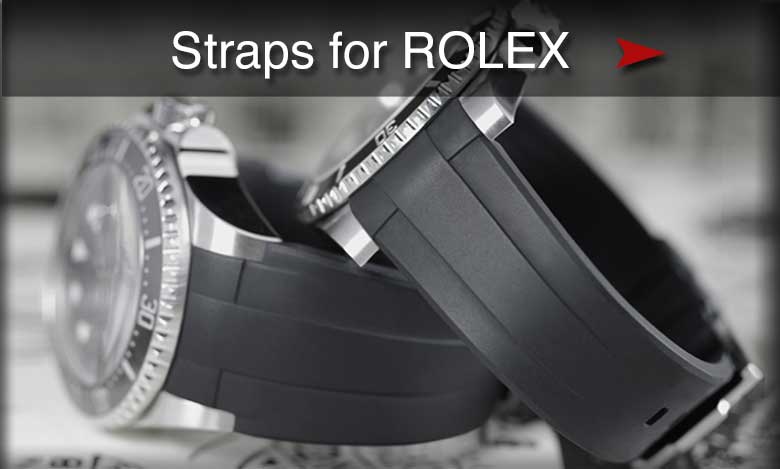
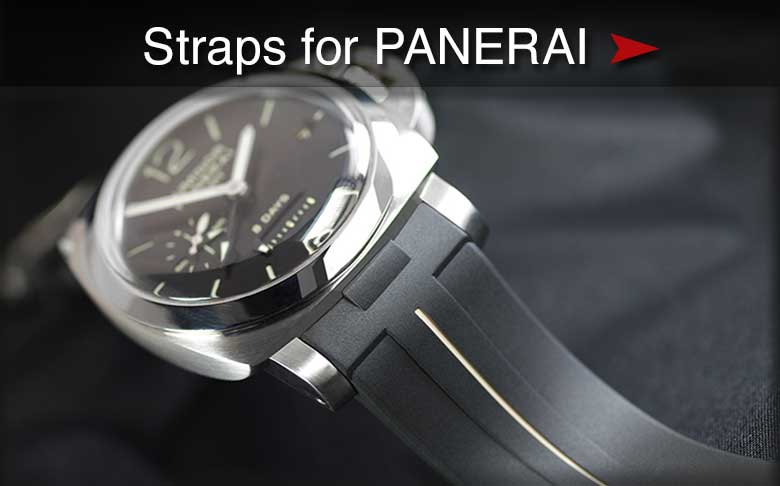
The former professional cyclist has been photographed wearing several Rolex models, including the Cosmograph Daytona, GMT-Master II and Rolex Deepsea. He has also appeared with a Panerai Luminor.
The most personal watch associated with Armstrong, however, is not a standard-production model.
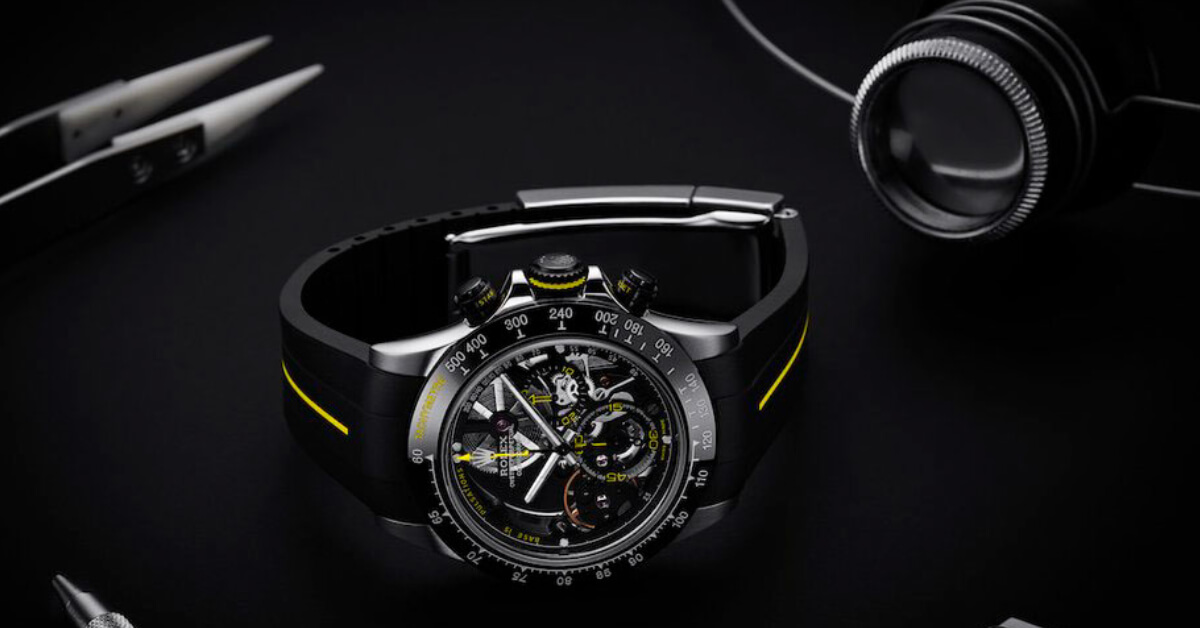
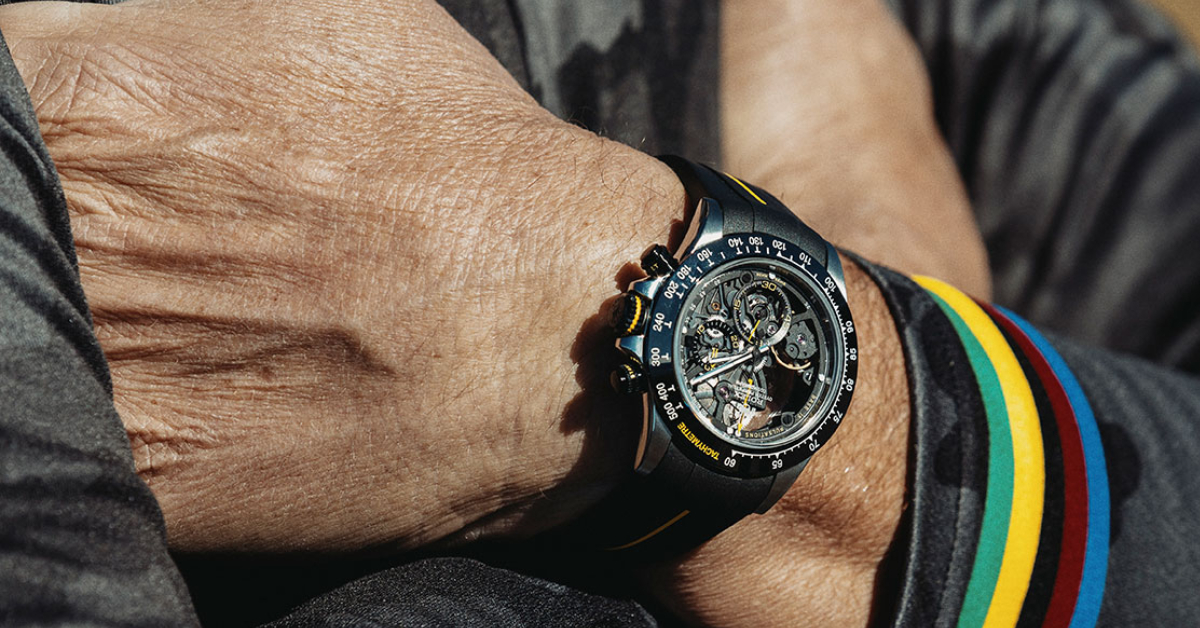
The Artisans de Genève Armstrong Challenge began as a stainless-steel Rolex Cosmograph Daytona reference 116520. At Armstrong’s request, the watch was transformed through extensive skeletonization, a manually wound movement, a vintage-inspired pulsations scale and a bespoke black-and-yellow Rubber B strap.
The completed watch connects traditional chronograph design with the measurements, colors and mechanical character associated with professional cycling.
The Armstrong Challenge was independently personalized at the request of the watch’s owner. Artisans de Genève and Rubber B are independent companies and are not affiliated with, sponsored by, authorized by or endorsed by Rolex SA.
Quick Answer: What Watches Does Lance Armstrong Wear?
The best-documented watches worn by Lance Armstrong include:
- Rolex GMT-Master II reference 16710 with a black-and-red bezel
- Rolex Cosmograph Daytona reference 116520
- Rolex Cosmograph Daytona reference 116500LN
- Rolex Deepsea
- Panerai Luminor 1950
- Artisans de Genève Armstrong Challenge, based on a Rolex Daytona 116520
The Armstrong Challenge is the most distinctive watch connected with his collection. It features an openworked calibre 4130 converted to manual winding, a pulsations display, yellow accents and a bespoke Rubber B strap designed specifically for the private project.
Lance Armstrong Watch Collection at a Glance
| Watch | Identification | Principal Characteristic |
| Rolex GMT-Master II 16710 | Publicly photographed | Black-and-red 24-hour bezel |
| Rolex Daytona 116520 | Publicly photographed | Stainless-steel bezel and calibre 4130 |
| Rolex Daytona 116500LN | Publicly photographed | White dial and black ceramic bezel |
| Rolex Deepsea | Reported public appearance | Professional extreme-depth Rolex |
| Panerai Luminor 1950 | Publicly photographed | Large cushion case and crown-protecting bridge |
| Armstrong Challenge | Private personalization | Skeletonized pulsations Daytona with bespoke Rubber B strap |
These documented appearances should not be interpreted as a complete inventory of every watch Armstrong may own privately.
Who Is Lance Armstrong?
Lance Armstrong is a former American professional cyclist who became one of the most recognizable athletes of his generation.
Born in Texas in 1971, Armstrong began competing as a swimmer and triathlete before concentrating on professional cycling. He won the World Road Race Championship in 1993 and later returned to competition after undergoing treatment for testicular cancer.
Armstrong was initially credited with seven consecutive Tour de France victories between 1999 and 2005. Those results were later disqualified following an anti-doping investigation, and he received a lifetime ban from sanctioned competition.
That history remains inseparable from Armstrong’s public profile. Within the context of his watch collection, however, cycling, endurance, time measurement and physical performance remain the most important themes.
Those elements became central to the Artisans de Genève Armstrong Challenge.

The Artisans de Genève Armstrong Challenge
The Armstrong Challenge was commissioned by Lance Armstrong as a private personalization of his Rolex Cosmograph Daytona reference 116520.
Rather than requesting a conventional motorsport interpretation of the Daytona, Armstrong looked toward an earlier tradition of chronograph design.
The project was inspired by vintage pulsations watches, manually wound movements and the ability to observe the mechanical architecture through an openworked construction.
The original watch was extensively reconstructed with:
- A skeletonized movement
- A two-register dial
- A pulsations scale
- Manual winding
- A black ceramic bezel
- Black-treated pushers and crown
- Yellow functional accents
- A sapphire display case back
- A bespoke Rubber B strap
The result preserves the essential dimensions of the Daytona while giving the watch an entirely different visual and mechanical identity.
Armstrong Challenge Specifications
| Feature | Armstrong Challenge |
| Original watch | Rolex Cosmograph Daytona |
| Base reference | 116520 |
| Case diameter | 40 mm |
| Case material | Stainless steel |
| Bezel | Custom black ceramic bezel |
| Dial | Skeletonized two-register pulsations display |
| Base movement | Modified Rolex calibre 4130 |
| Winding | Manual |
| Power reserve | Approximately 72 hours |
| Frequency | 28,800 vibrations per hour |
| Case back | Sapphire display back |
| Water resistance | Reported at 100 metres |
| Strap | Bespoke black-and-yellow Rubber B strap |
| Project type | Private personalization |
The Rolex Daytona 116520 Foundation
The Armstrong Challenge began as a stainless-steel Rolex Daytona reference 116520.
Introduced in 2000, the 116520 marked an important moment in the history of the Cosmograph Daytona because it was the first production generation powered by Rolex’s in-house calibre 4130.
In its original configuration, the watch featured:
- A 40 mm stainless-steel Oyster case
- A stainless-steel tachymeter bezel
- Three chronograph registers
- Screw-down chronograph pushers
- An Oyster bracelet
- A self-winding chronograph movement
- Approximately 72 hours of power reserve
- Water resistance to 100 metres
Artisans de Genève retained the case proportions but changed nearly every visible and functional element of the original watch.
The completed project remains recognizable as a Daytona, but it must be described as an independently personalized watch rather than an official Rolex model.
Inspired by Vintage Pulsations Chronographs
The Armstrong Challenge uses a pulsations scale rather than a conventional tachymeter-focused display.
A pulsations chronograph allows the wearer to calculate heart rate. The chronograph is started, a predetermined number of heartbeats is counted and the corresponding pulse rate is read from the scale.
This type of display has historical connections with medical chronographs, where timing functions were used by physicians to measure a patient’s pulse.
For a professional cyclist, the relationship is particularly relevant.
Heart rate is one of the most important measurements used to assess:
- Physical effort
- Training intensity
- Recovery
- Endurance
- Cardiovascular performance
The pulsations display therefore gives the watch a function and design language closely connected to Armstrong’s athletic background.
From Three Counters to Two
A standard Rolex Daytona has three chronograph registers.
For the Armstrong Challenge, the original 12-hour counter was removed. This change required more than a redesigned dial. The corresponding mechanical components were also removed from the movement.
The completed watch retains two counters positioned at approximately 3 and 6 o’clock.
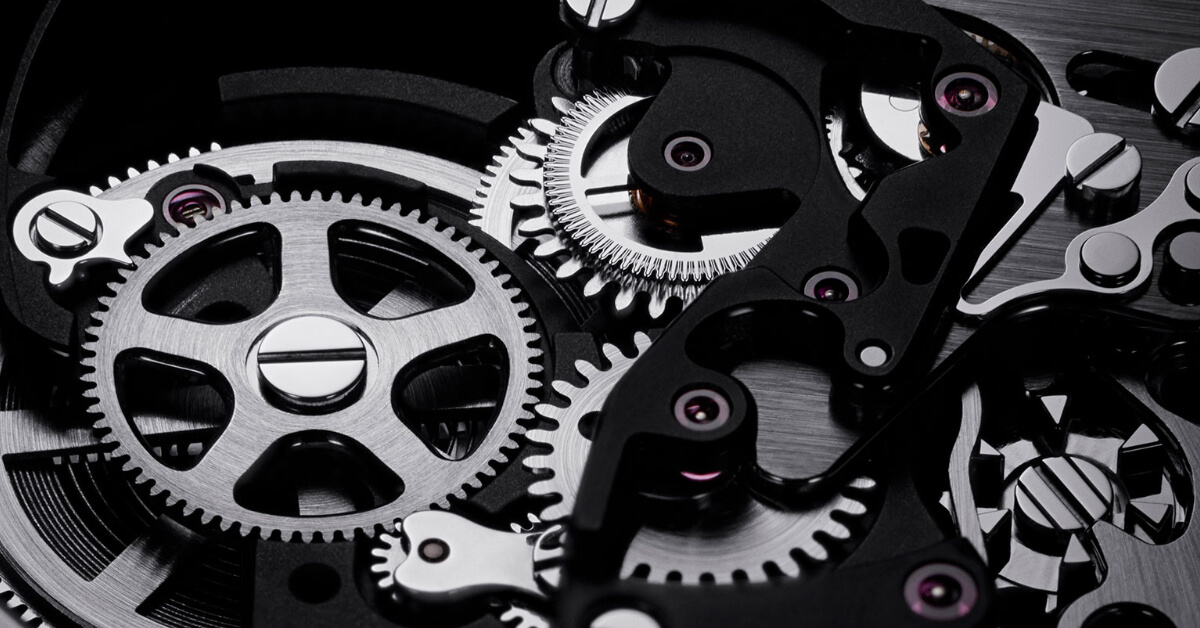
Removing the third register created more open space within the dial and revealed a larger portion of the calibre beneath it.
The asymmetrical layout distinguishes the project from both the original 116520 and more conventional skeletonized Daytona interpretations.
Calibre 4130 Converted to Manual Winding
The standard Rolex calibre 4130 is an automatic chronograph movement.
Its winding rotor moves above the calibre and replenishes the mainspring as the watch is worn. While mechanically efficient, the rotor conceals part of the movement when viewed through a transparent case back.
For the Armstrong Challenge, Artisans de Genève removed the automatic winding system and converted the calibre to manual winding.
This modification accomplished two objectives.
First, it created a clearer view of the chronograph mechanism through the sapphire case back.
Second, it changed the relationship between the owner and the watch. The movement must be wound directly through the crown, creating a more traditional interaction with the mechanism.
Despite the removal of the automatic system, the modified movement retains an approximate power reserve of 72 hours.
Skeletonized and Hand-Finished Components
The movement was completely dismantled before selected bridges and components were opened, reshaped and refinished.
Skeletonization requires exceptional precision.
Material must be removed to reveal the mechanical architecture without weakening the bridges responsible for supporting the gear train, barrel, chronograph mechanism and regulating system.
The Armstrong Challenge combines:
- Openworked bridges
- Matte black surfaces
- Exposed metallic components
- Hand-executed beveling
- A black balance bridge
- Yellow functional accents
The finishing gives the calibre a technical, industrial appearance appropriate for a project inspired by professional cycling and physical performance.
The Black Ceramic Bezel
The original Daytona reference 116520 was fitted with a stainless-steel tachymeter bezel.
Artisans de Genève replaced it with a custom black ceramic component.
The ceramic bezel creates a strong visual frame around the openworked dial and connects with the black movement elements, crown, pushers and strap.
Yellow markings provide contrast while maintaining the color palette used throughout the project.
The bezel gives the watch a more contemporary and technical appearance than the original steel configuration.
Black and Yellow Case Details
Yellow is used throughout the Armstrong Challenge as a controlled accent color.
It appears on:
- The pulsations scale
- The central chronograph hand
- Selected dial markings
- The winding crown
- The chronograph pushers
- The bespoke Rubber B strap
The black-treated crown and pushers provide a sharp contrast against the stainless-steel case.
The repeated use of yellow creates a consistent visual connection between the watch’s exterior controls, dial indications and strap.
It also references the color historically associated with Armstrong’s cycling career.
The Sapphire Case Back
The standard Daytona 116520 has a closed stainless-steel case back.
For the Armstrong Challenge, it was replaced with a sapphire display back.
This modification reveals the openworked calibre and permits an unobstructed view of the manually wound construction.
Because the automatic rotor was removed, the skeletonized movement can be seen without a winding mass repeatedly crossing the display.
The sapphire back is therefore not only decorative. It allows the central technical work of the project to remain visible.
The Bespoke Rubber B Strap
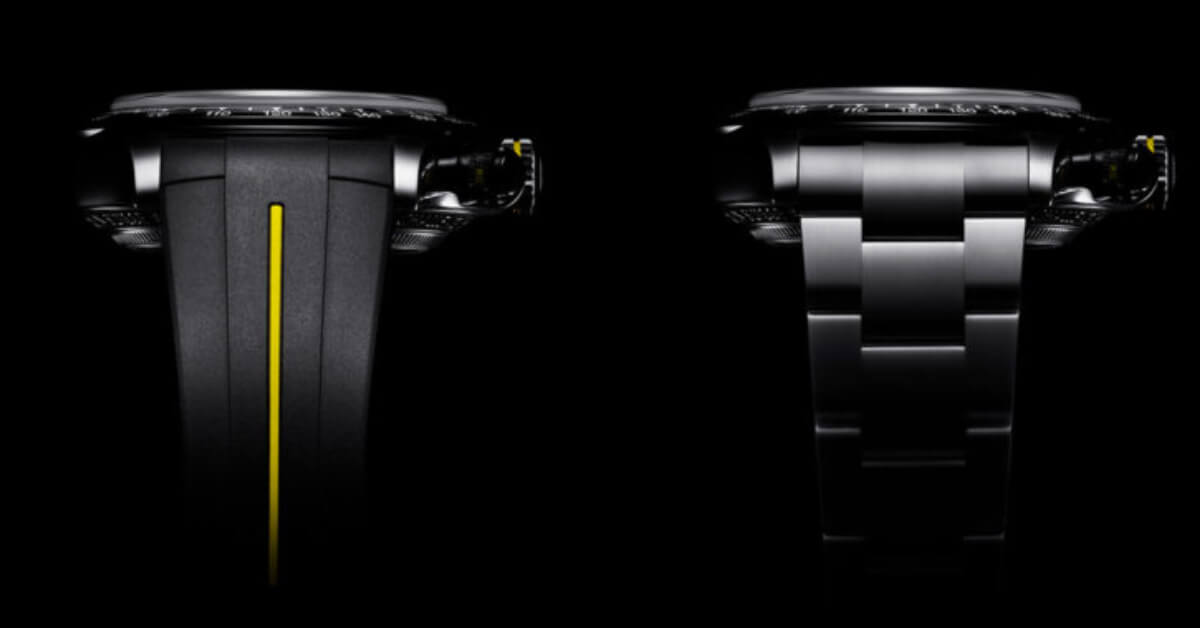
The Rubber B strap was developed specifically for the Armstrong Challenge.
It was not a standard black Daytona strap installed after the personalization was completed. The strap was created as part of the project and designed to continue the black-and-yellow color language established by the dial, bezel, crown and chronograph pushers.
The predominantly black construction supports the technical appearance of the watch.
The yellow accent connects with:
- The pulsations scale
- The chronograph indications
- The winding crown
- The pushers
- Armstrong’s cycling identity
The result is a strap that contributes directly to the design rather than functioning as a secondary accessory.
Why the Rubber B Strap Is Essential
The Daytona 116520 was originally delivered on a stainless-steel Oyster bracelet.
The bracelet preserves the traditional profile of the Rolex Daytona, but it does not continue the black-and-yellow visual language of the Armstrong Challenge.
The bespoke Rubber B strap creates a more unified composition.
Its black exterior connects with the ceramic bezel and openworked movement.
Its yellow detail creates a direct relationship with the dial and chronograph controls.
This allows the personalized watch to maintain the same design language from the case to the wrist.
Designed Specifically for the Watch
A bespoke integrated strap must account for more than the lug width of the watch.
Its construction must consider:
- Case geometry
- Lug shape
- Spring-bar placement
- Strap curvature
- Case weight
- Closure requirements
- Material flexibility
- The visual identity of the watch
For the Armstrong Challenge, the strap also had to complement a highly complex skeletonized dial without competing with it.
The final black-and-yellow design introduces enough color to support the project while allowing the exposed calibre to remain the principal visual focus.
Oyster Bracelet or Rubber B Strap?
The Armstrong Challenge has been shown on both its Oyster bracelet and the bespoke Rubber B strap.
Each configuration creates a different result.
On the Oyster Bracelet
The stainless-steel bracelet:
- Preserves a closer connection to the original Daytona 116520
- Matches the steel case
- Creates a more traditional Rolex silhouette
- Places greater visual emphasis on the modified dial and bezel
On the Rubber B Strap
The bespoke rubber strap:
- Continues the black-and-yellow color scheme
- Creates a more technical sports-watch appearance
- Connects the watch more directly with cycling
- Distinguishes the project from a standard Daytona
- Makes the strap part of the complete design
The Rubber B configuration communicates the original concept of the project more clearly because the strap participates directly in its color and material identity.
Other Watches in the Lance Armstrong Collection
Rolex GMT-Master II Reference 16710
One of the Rolex watches most closely associated with Lance Armstrong is the GMT-Master II reference 16710 with a black-and-red bezel.
The configuration is commonly known among collectors as the “Coke” GMT-Master II.
The watch provides a second time-zone display through its additional 24-hour hand and rotating bezel.
For an athlete traveling frequently between international races, training locations and public appearances, the GMT-Master II offered a practical professional function.
The reference also reflects a recurring pattern within Armstrong’s collection: robust stainless-steel watches designed for travel, timing and active use.
Rolex Cosmograph Daytona Reference 116520
Before the Armstrong Challenge, Armstrong had already been photographed wearing a standard stainless-steel Rolex Daytona reference 116520.
The watch featured a white dial and steel tachymeter bezel.
This is the same reference selected as the foundation for the Artisans de Genève personalization.
The choice suggests that the Daytona was already an established part of Armstrong’s watch preferences before the Armstrong Challenge was developed.
Rolex Cosmograph Daytona Reference 116500LN
Armstrong has also been photographed wearing the ceramic-bezel Rolex Daytona reference 116500LN with a white dial.
Introduced in 2016, this generation replaced the steel bezel of the 116520 with a black Cerachrom ceramic bezel.
The white dial uses dark rings around the chronograph counters, creating the high-contrast appearance often described as a “Panda” configuration.
The 116500LN offers an interesting comparison with the Armstrong Challenge.
The 116500LN represents Rolex’s official evolution of the modern Daytona.
The Armstrong Challenge represents an independent reconstruction of the previous 116520 through skeletonization, manual winding and a vintage-inspired pulsations display.
Rolex Deepsea
Lance Armstrong has also been associated with the Rolex Deepsea.
The Deepsea belongs to Rolex’s professional diving family and is designed for extreme underwater pressure.
Its substantial case, professional construction and strong wrist presence correspond with the larger tool-watch character found elsewhere in Armstrong’s collection.
Available public photographs do not always establish the exact Deepsea reference with enough clarity. It is therefore preferable to identify the watch by its model family rather than assign a specific reference without sufficient evidence.
Panerai Luminor 1950
Armstrong has also been photographed wearing a Panerai Luminor 1950.
The Luminor 1950 family is recognized by:
- A large cushion-shaped case
- A highly legible dial
- Panerai’s distinctive crown-protecting bridge
- A strong military and diving-watch identity
Earlier reports have identified Armstrong’s watch more specifically as a Luminor Marina or Luminor GMT. Without a sufficiently detailed photograph, the broader Luminor 1950 identification is more accurate.
What the Collection Has in Common
The documented Lance Armstrong watch collection is dominated by professional sports watches.
Repeated characteristics include:
- Chronograph functions
- Highly legible dials
- Stainless-steel cases
- Strong wrist presence
- Black bezels
- Timing functions
- Travel complications
- Water resistance
- Direct relationships with endurance and performance
Even the Armstrong Challenge follows the same pattern.
Its movement finishing and extensive skeletonization introduce elements of high watchmaking, but the central purpose remains the measurement of elapsed time and pulse.
Is the Armstrong Challenge an Official Rolex?
No.
The original watch was manufactured by Rolex as a Cosmograph Daytona reference 116520.
The modifications were later completed independently by Artisans de Genève at the request of the watch’s owner.
Rolex SA did not design, manufacture, approve or authorize the personalized configuration.
The correct description is:
An independently personalized Rolex Daytona 116520 by Artisans de Genève.
The Armstrong Challenge should not be described as an official Rolex collaboration, factory Rolex edition or Rolex-produced limited edition.
Can the Armstrong Rubber B Strap Be Purchased?
The black-and-yellow Rubber B strap was created as a bespoke part of the Armstrong project.
It should not be presented as a standard production strap available for every Rolex Daytona.
Rubber B manufactures Swiss-Made vulcanized rubber straps for compatible Rolex Daytona references. Each production strap must be selected according to:
- The complete watch reference
- Bezel generation
- Case geometry
- Clasp system
- Intended closure
A production Rubber B strap may share black or yellow design elements with the Armstrong Challenge, but it should not be described as the original commissioned strap.
Frequently Asked Questions
What Is the Artisans de Genève Armstrong Challenge?
The Armstrong Challenge is a privately commissioned personalization based on a Rolex Daytona 116520. It features a skeletonized movement, manually wound architecture, a pulsation scale, ceramic bezel, sapphire case back and bespoke Rubber B strap.
Which Rolex Was Used for the Armstrong Challenge?
The original watch was a stainless-steel Rolex Cosmograph Daytona reference 116520 with a 40 mm Oyster case.
Is the Armstrong Challenge Automatic?
No. Artisans de Genève removed the automatic winding system and converted the calibre 4130 to manual winding.
This provides a clearer view of the chronograph mechanism through the sapphire case back.
How Long Is the Power Reserve?
The modified movement provides approximately 72 hours of power reserve.
What Is a Pulsations Scale?
A pulsations scale allows the chronograph to be used to calculate heart rate.
The wearer starts the chronograph, counts a specified number of heartbeats and reads the corresponding pulse rate from the scale.
Why Does the Watch Use Yellow?
Yellow is strongly connected with Armstrong’s cycling history.
The color is used across the pulsations scale, chronograph indications, crown, pushers and bespoke Rubber B strap.
Who Made the Armstrong Strap?
Rubber B developed the bespoke black-and-yellow strap specifically for the Armstrong Challenge.
Is the Strap a Regular Rubber B Product?
No. It was a private collaborative execution created for the personalized watch.
Does Lance Armstrong Wear a Rolex Daytona?
Yes. He has been publicly associated with both the stainless-steel Daytona reference 116520 and the ceramic-bezel Daytona reference 116500LN.
What Rolex GMT Does Lance Armstrong Wear?
He has been photographed wearing a Rolex GMT-Master II reference 16710 with a black-and-red bezel.
Does Lance Armstrong Own a Panerai?
He has been photographed wearing a Panerai Luminor 1950. The exact reference cannot be confirmed with sufficient certainty from the available public images.
Final Assessment
The Lance Armstrong watch collection is centered on watches designed for timing, travel and physical performance.
The Rolex GMT-Master II introduced a practical second time zone.
Multiple generations of the Rolex Daytona reflected Armstrong’s preference for chronographs.
The Rolex Deepsea and Panerai Luminor added substantial professional tool-watch designs.
The Armstrong Challenge remains the most personal expression within the collection.
Artisans de Genève transformed the familiar Daytona 116520 by opening the calibre, removing the automatic winding architecture and developing a manually wound two-register chronograph with a pulsations scale.
Rubber B completed the project with a strap designed specifically for the watch.
The black vulcanized rubber construction continues the technical character of the bezel, dial and movement. Its yellow detail connects the strap with the pulsations display, chronograph hand and cycling-inspired controls.
The result is not simply a skeletonized Rolex Daytona.
It is a privately commissioned chronograph in which the movement, function, colors and strap were developed around one owner’s relationship with time, endurance and cycling.
The Armstrong Challenge was independently personalized for private use. Artisans de Genève and Rubber B are independent companies and are not affiliated with, sponsored by, authorized by or endorsed by Rolex SA. Rolex, Cosmograph Daytona, GMT-Master II, Deepsea and related trademarks are the property of Rolex SA. Panerai and related trademarks are the property of their respective owner.
Follow Us on Instagram